
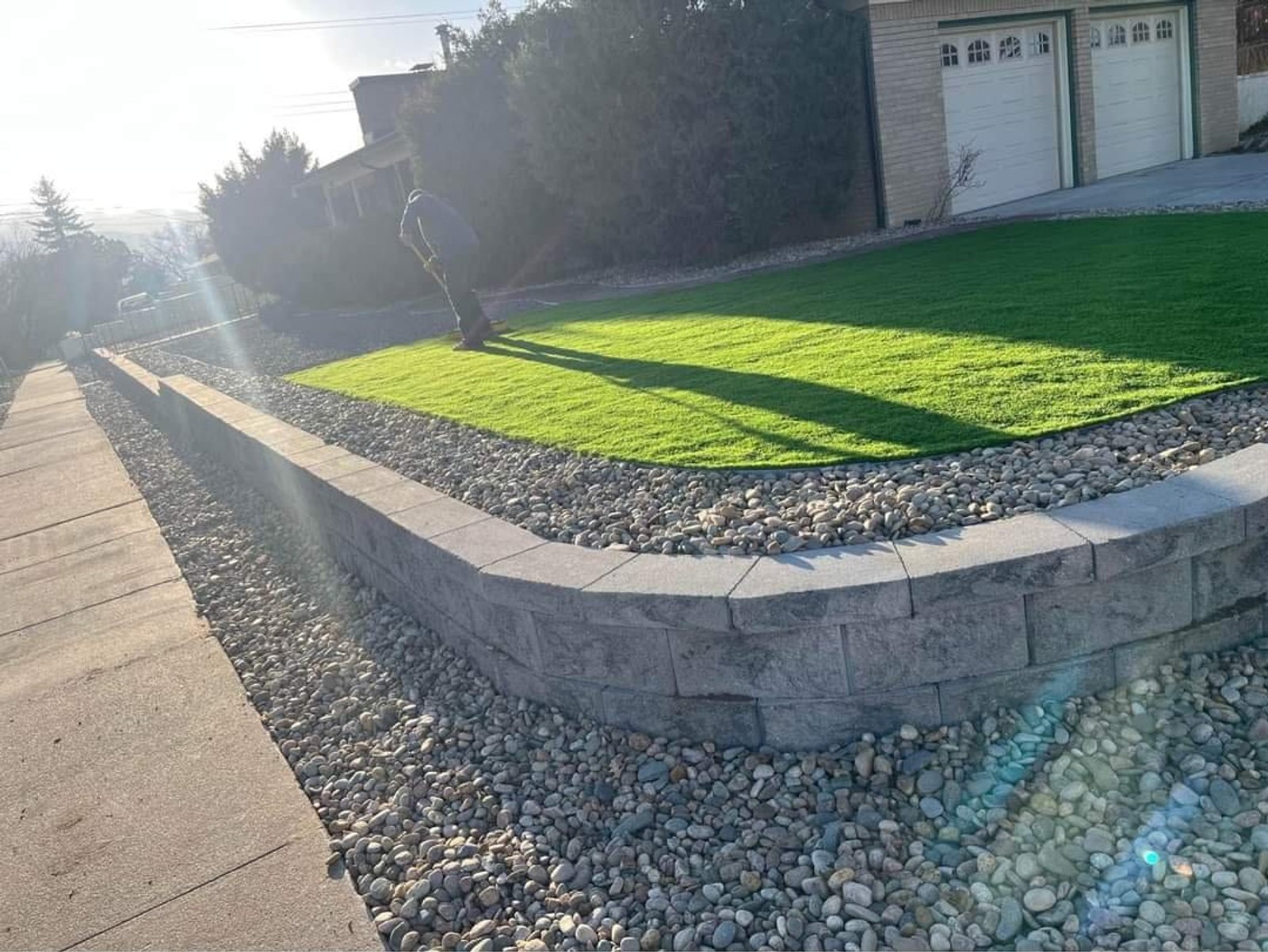
Retaining Wall Installation in Colorado Springs
Block, boulder, and natural stone walls that hold back the slope and handle the water, built on real base and drainage so they don't lean or crack on Colorado's clay soil. Family-owned, ten years on the job, and a free estimate before you spend a dollar.
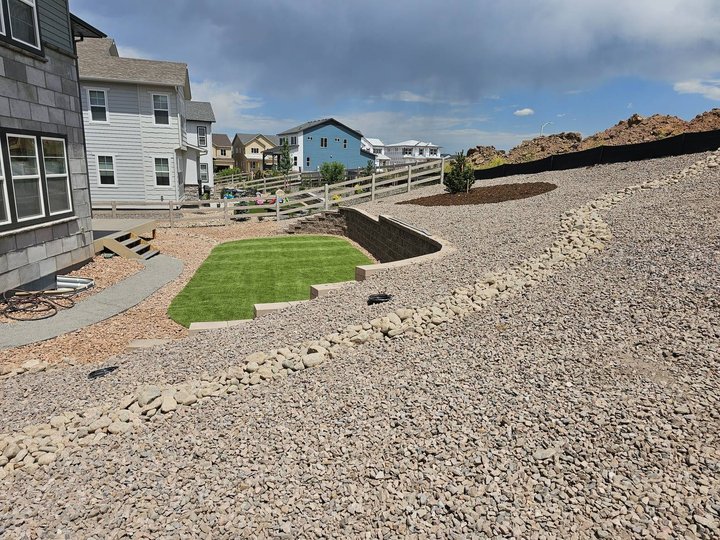
A retaining wall is only as good as what's behind it
A wall that leans, bulges, or cracks almost never failed because of the block. It failed because of the base and the drainage. Colorado's expansive clay swells when it's wet and shrinks when it's dry, water builds up behind a wall with nowhere to go, and the freeze-thaw does the rest. Do the hidden work right and the wall stays straight for decades:
- A compacted gravel base and level first course the whole wall rides on
- Gravel backfill and a drain line so water never loads up behind it
- Backfill compacted in lifts, not dumped, so it can't settle and lean
- Block, boulder, or natural stone sized to the height and the load
That buried work is exactly where cheap installs cut corners, and it's exactly where we don't. You pay for a wall once when it's built for the ground it's sitting on.
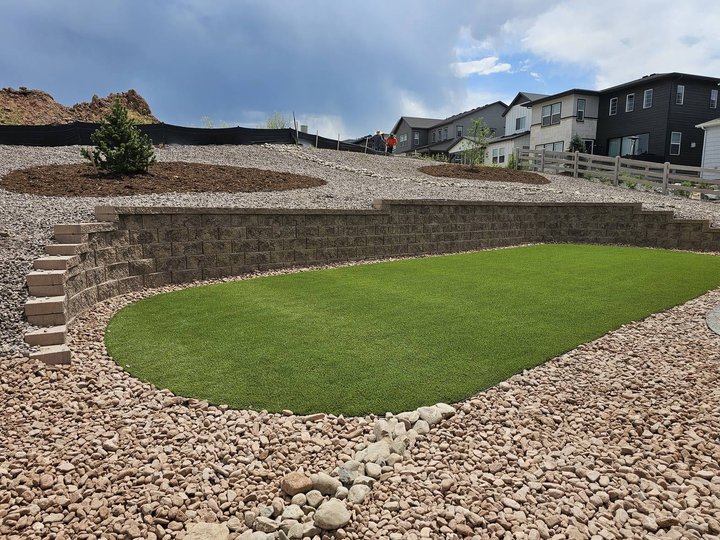
A wall built in the right order, from the ground up
- We dig the footing trench. We excavate down below grade so the first course sits underground and the wall has something solid to start from.
- We build and compact the base. A crushed gravel base goes in and gets compacted, then leveled. Every block above rides on this, so we take our time here.
- We set a dead-level first course. The bottom row is checked and re-checked for level. Get this course right and the whole wall stacks true.
- We build in drainage. Gravel backfill and a perforated drain line go in behind the wall so water moves out instead of pushing on it.
- We stack, batter, and backfill in lifts. We stack the courses with the right setback, and compact the backfill a layer at a time so nothing settles later.
- We cap it and clean up. Caps go on for a finished edge, we tie in any rock or beds, haul off the debris, and walk it with you before we call it done.
Taller walls and walls holding a real load may need an engineered design or a permit. We'll tell you up front if yours does and handle that part for you.
How much does a retaining wall cost in Colorado Springs?
Straight answer: it depends on the wall. Here's what actually moves the price, so you know what you're paying for, and why a real number needs eyes on your slope.
Length & height
The bigger the wall, the more block and labor. Height matters most: a tall wall holds far more load than a short one and has to be built heavier to match.
Material
Standard block, big boulders, or natural stone all price differently. The look you want and the load the wall carries decide what makes sense.
Base & drainage
This is the big one. The trench, the gravel base, the drain line, and the backfill are most of the real work, and skipping them is why cheap walls fail.
Access & slope
A steep grade or a tight backyard the machines can't reach means more hand labor and hauling than a wide-open, workable site.
Extras
Steps, caps, corners and curves, tying into a patio or beds, or an engineered design and permit on a tall wall all add to it.
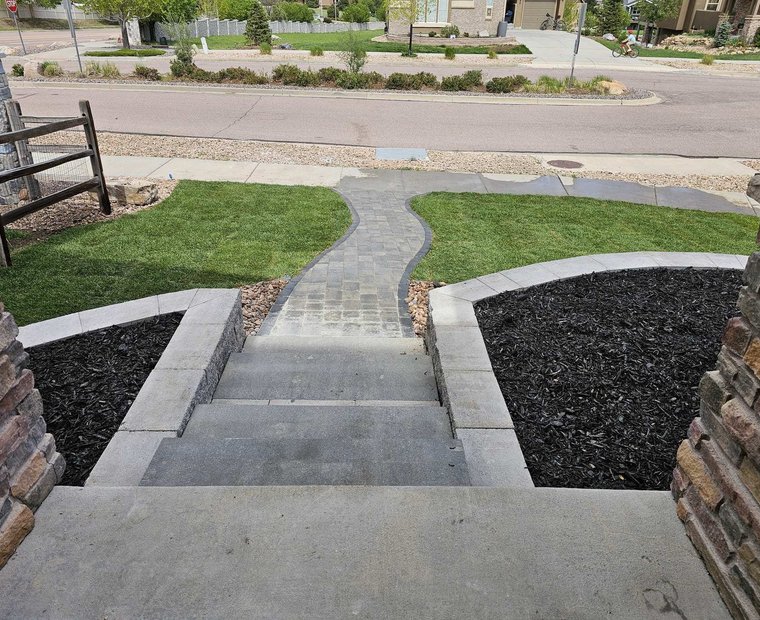

You pay for a wall once when it's built right
A wall that leans or cracks isn't a repair, it's a rebuild, and that means tearing out the failed wall before you can even start over. Building it once on a real base with real drainage costs more than a corner-cutting install and saves you the whole thing twice. We come out, look at your slope and your drainage, and hand you a written estimate for free with no obligation.
Get a Quote on Your WallMore than a stack of block
Holds the slope
Keeps a hillside where it belongs instead of sliding, slumping, or washing down into the yard every spring.
Gives you usable yard
Turns a slope you can't do anything with into flat, level ground: a lawn, a patio, a garden, or a play area.
Controls the water
Built-in drainage moves runoff where you want it and keeps water from pooling against the wall or the house.
Stops erosion
Locks down soil that would otherwise wash out, so you're not losing ground and re-grading after every big storm.
Built for our clay
Engineered base and drainage made for expansive clay and freeze-thaw, so it stays straight through Colorado winters.
Adds real curb appeal
A clean block, boulder, or stone wall is a finished feature, and it ties right into patios, steps, and planting beds.
Retaining wall questions we get asked
How much does a retaining wall cost in Colorado Springs?
It comes down to the length and height of the wall, the material, how much base and drainage work the site needs, and access. Height and drainage swing the number the most, so a real quote needs eyes on your actual slope. We measure it in person and give you a free written estimate with no obligation.
Why do retaining walls lean, bulge, or crack?
Almost always the base or the drainage, not the block. If the wall sits on soft or uneven ground, or water builds up behind it with nowhere to drain, our clay soil and freeze-thaw will push it out of line over a few seasons. A compacted base, a drain line, and backfill compacted in lifts are what keep a wall straight, and they're where we put the work.
Block, boulder, or natural stone, which should I use?
All three work; it comes down to the look you want, the height, and the budget. Manufactured block is clean, consistent, and cost-effective. Boulders read natural and rugged and are great on bigger grade changes. Natural stone is the premium look. We'll walk you through what fits your yard and the load the wall has to carry.
Do tall retaining walls need a permit or engineering?
Often, yes. Once a wall gets tall enough or holds a real load, local code can require an engineered design and a permit. It varies by jurisdiction and by what the wall is holding back. We'll tell you up front whether yours needs it and handle that part so you're not chasing paperwork.
Can you build on a steep slope or heavy clay soil?
Yes, that's most of what we build on around here. Steep grades and expansive clay are exactly why the base and drainage matter so much, and we build for the ground that's actually under your yard. It's a big part of our work over in Castle Rock and down in Pueblo, where the clay and caliche don't forgive a shortcut.
Do retaining walls help with drainage and erosion?
A wall built right does both. The drainage we build in behind it moves runoff where you want it instead of pooling against the wall or the house, and the wall itself holds soil that would otherwise wash out. Want to see the rest of what we build? Check out our full landscaping services, or get a quote on your wall.
Ready for a backyard you'll want to spend time in?
Tell us what you're thinking and we'll come take a look. The estimate is free, there's no obligation, and you'll talk straight to one of the owners.
Or call us at (719) 639-4988. Hablamos español.